
Wheelchairs have evolved over the decades to become technological wonders that aid people with disabilities by enabling them to move and act as an extension of their bodies.
We’re talking about minimalist wheelchairs—a modern mobility trend that embodies “less is more” when it comes to comfort and functionality.
In this post, we explore the history behind these lighter-than-air devices, the benefits they offer, and who it’s ideal for!
What is a Minimalist Wheelchair?
Minimalist wheelchairs are exactly that: barely there, but incredibly stylish. When sitting in one, it becomes an extension of your body, built small to emphasize the person and not the mechanics enabling the body to move.
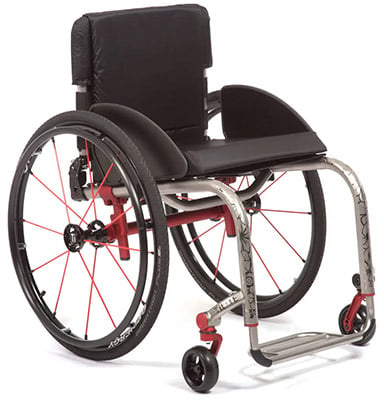
This modern wheelchair is designed with fewer moving parts to maximize efficiency. Meticulous engineering and ultralightweight materials are used to optimize balance, control, and overall performance.
The minimalist rigid wheelchair is manual, weighing a scant 20 lbs, making it incredibly versatile. You can use these chairs indoors and outdoors. Travel is simplified since you don’t need a lift to transfer the chair into a vehicle, and many of the brands that manufacture these chairs offer full customization options.
We’ll look at a few of the top brands that produce ultra-lightweight wheelchairs later in the article. But first, let’s take a more in-depth glance at how these precision models differ from standard wheelchairs based on build.
Let’s start with the source of strength. Minimalist frames are typically made from strong and resilient metals, such as carbon fiber and aluminum. This makes the minimalist chair lightweight for travel and the design compact.
The axle plates are also configured differently from a standard wheelchair—mounted off of the seat tube only, which extends the camber tube further below where the user mounts the chair.
This setup makes the extended mounting point a more vulnerable area requiring specialized hardware and stability design. It’s reinforced by either clamping or bolting the hardware onto the seat rail and can be further adjusted for comfort.
For example, if you look at TiLite’s ZRA minimalist wheelchair, it implements this type of axle-plate design, allowing the user to adjust by loosening a couple of bolts with an Allen wrench. It’s a simple system that exemplifies the efficiency and precision of this ultralightweight construction.
Another difference between a standard wheelchair build and a minimalist chair is the caster mountings. Popular models such as the TiLite and Quickie utilize less stable systems than the typical eccentric bolt method seen on many chairs that can be adjusted by simple loosening and tightening.
There’s no indexing when adjusting the caster angle, which makes it difficult to confirm the alignment.
However, it’s challenging to pinpoint extreme differences between many of the chairs on the market, mainly because users get a lot of leeways to modify the chair for their specific needs.
To better understand what minimalist wheelchair design offers, we describe a few popular models below.
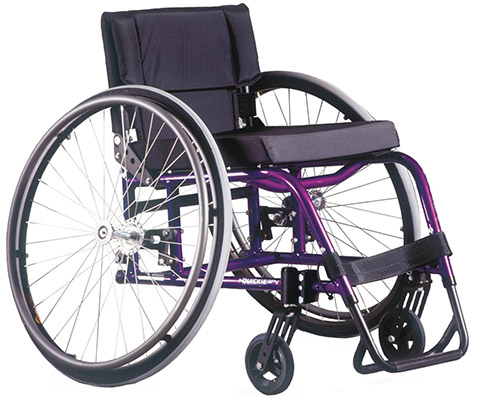
Quickie GP Series
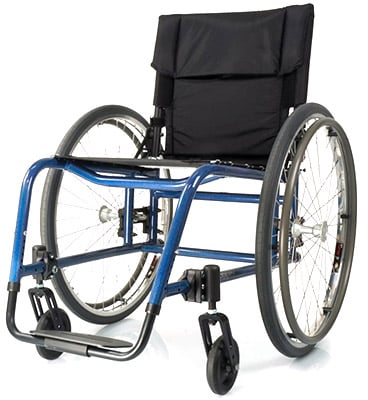
The Quickie GP was designed over 25 years ago and is one of the original minimalist wheelchairs on the market.
Its reputation for quality is solid and known for durability and comfort. One of the highlights of this lightweight wheelchair is that it can be used as an everyday chair and also as a sports wheelchair for playing basketball or tennis.
It features a tapered front frame, the option to install high-performance wheels, and up to 12-degrees of wheel camber for phenomenal maneuverability.
Küschall
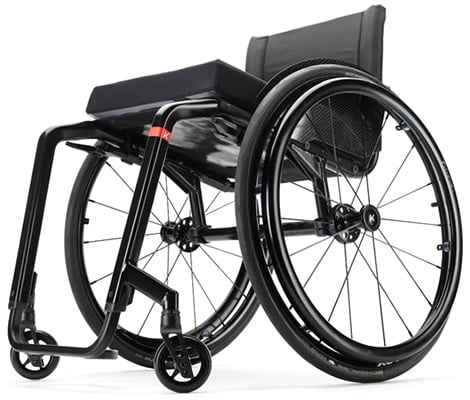
This is the godfather of the minimalist wheelchair, with Rainer Küschall—a reputable European wheelchair designer—creating the minimal “cantilever” or “monotube” frame that started gaining momentum in 1985.
They offer a few different models, from rigid to compact and collapsible options for travel. The KSL wheelchair is one of their iconic designs, weighing only 15 lbs. It features a fully adjustable seat module that is separate from the frame, allowing the user to enjoy a free range of positioning options.
Carbon Black Advanced Mobility
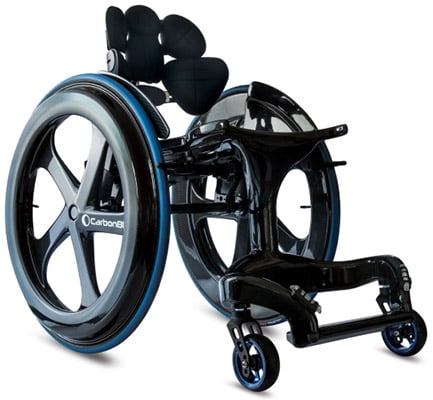
The stylish Carbon Black utilizes carbon fiber and aluminum components for top-tier durability, with high-tech shock-absorbing mechanisms for a smooth ride.
Comfort is at the forefront, with ergonomic seating manufactured from water-resistant, breathable fabric.
You can customize and adjust many elements. The wheels and backrest can also be removed for portability.
The Benefits of a Minimalist Wheelchair
Now that you understand the mechanics of the minimalist wheelchair design, you may be wondering what on earth a no-frills device such as this can offer someone with disabilities.

Easy Portability
With a transport weight of around 10 lbs, this type of wheelchair is easy to bring along while traveling, whether you’re jumping in the car or checking into a flight.
Many models fold or break down into smaller parts, enabling the user to store the device in the trunk of a car. That means you don’t need to waste time finagling with a lift or spend thousands of dollars modifying your vehicle to haul your wheelchair.
Self-Propulsion
For individuals who possess upper body strength, these wheelchairs offer exercise and complete freedom. You can self-propel with ease, without the aid of an assistant or the need to keep an eye on battery range.
Full Customization
Many models are built from the ground up according to the user’s specifications. You get a custom fit that ensures comfort, with the option to personalize colors and adjust certain components, such as seating.
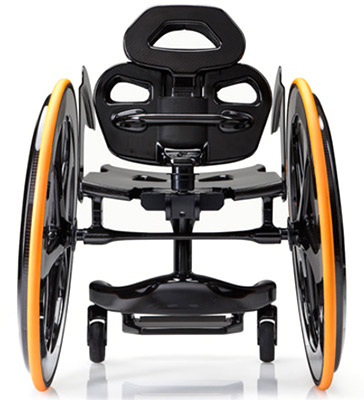
Great for Small Spaces
You don’t have to worry about where you can store your wheelchair or how you’re going to maneuver around tight quarters in your apartment.
Lightweight wheelchairs are compact and designed for precision, allowing users to enjoy the convenience that comes along with such a minimal design that doesn’t take up much room.
Promotes Independence and Confidence
The more you can do on your own, the greater you’re going to feel. Ultra Lightweight wheelchairs are highly versatile, with modified features that align with the individual’s lifestyle.
You can lead a more independent life—whether you need to run errands in town, get around your home, or play sports.
The Uses of a Minimalist Wheelchair
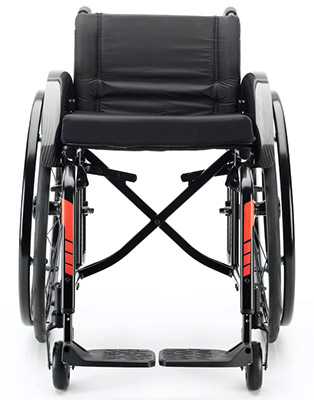
Minimalist wheelchairs can be used for a variety of activities. Of course, since many of these models are fully customizable, the things you’ll be able to do with your chair depend on how you build it.
With that being said, the minimalist wheelchair provides the perfect base for creating the chair of your dreams. It’s light, durable and resilient, which already cuts out a lot of the hassle associated with standard chairs.
Here are a few ways people use minimalist wheelchairs:
- Everyday use
- For navigating small spaces indoors
- Light outdoor use, such as running errands or attending events
- For playing court sports, such as tennis or basketball
- Traveling in a car or airplane
What to Consider When Choosing a Minimalist Wheelchair
If you’ve decided that a minimalist wheelchair is perfect for your needs, consider these factors before making any big (expensive) decisions.
The main focus of these wheelchairs is that they’re lightweight and easy to maneuver, which is accomplished with a manual design.
However, not everyone can propel a manual chair. But since minimalist wheelchairs are so light, it’s easier to move for those who struggle trying to propel a standard chair.
But one thing is for sure: you need to possess upper body strength and arm mobility to propel yourself.
Another important consideration is what you plan to use the wheelchair for. The good news is that minimalist chairs are highly versatile.
You can customize and adjust many components. So if you want to modify it for sports, you can count on the aluminum and carbon fiber parts to keep your chair well protected.
Finally, the cost is always the biggest consideration. While ultra-lightweight wheelchairs tend to be more expensive than standard models, you get what you pay for. Thanks to the advanced materials that are used for ultralight models, they tend to outlast many standard picks.
It’s important to check with your insurance agent about whether you qualify for coverage under your policy. Some insurance companies only cover low-grade “depot” chairs that don’t last very long.
Who Should Use a Minimalist Wheelchair?
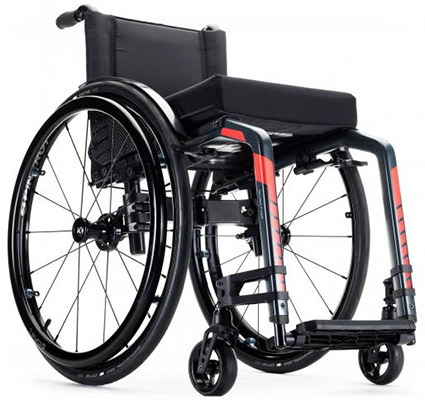
Before we conclude our article on minimalist wheelchairs, we’ll leave you with our honest recommendation for who might benefit the most by using an ultra-lightweight wheelchair.
- These chairs are not built for heavy body types, and most models can’t accommodate over 250 lbs.
- Perfect for older people who have trouble walking long distances
- Lightweight and foldable/collapsible for travel
- For people with a strong upper body for self-propulsion and steering
Guide to Minimalist Wheelchairs Conclusion
Wheelchairs come in all shapes and sizes, but perhaps none are as light and uncomplicated as the minimalist wheelchair.
It weighs only 20 lbs, with many models offering full customization to get the dimensions just right. Aluminum and carbon fiber frames are also important components, alluding to the high durability these wheelchairs have.
Resources and References: