
Does your mobility issue force you to spend the better part of each day confined to your wheelchair?
Have you begun developing sores as a consequence?
If you answered yes to the questions above, then the first thing you should know is that there’s something you can do about it!
For decades, industry professionals have known that spending too much time in one position, whether sitting in a wheelchair or lying in a hospital bed, can lead to pressure sores. Over the years, a number of different approaches have been tried to mitigate the damage and minimize the chances that they’ll develop. The issue has really only taken center stage once, back in 2004, on the heels of actor Christopher Reeve’s death.
Reeve gained fame playing Superman but spent the last decade of his life confined to a wheelchair after being thrown from a horse and breaking his neck during an equestrian competition. A pressure ulcer played a significant role in his death in 2004, briefly bringing the topic into the mainstream.
As with most things, attention didn’t linger on the subject for long as the world moved on, but the problem remains. Pressure sores pose a genuine risk to anyone who spends extended periods sitting or lying in one position.
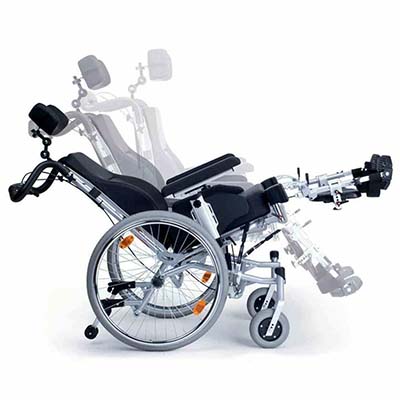
These days, the two most popular approaches to minimizing the problem take the form of tilt and recline wheelchairs. Tilt in space vs. recline comparison articles pop up as people try to find their way to the solution that works best for them.
In this piece, we’ll examine the pros and cons of both types of chairs and give you all the information you need to decide which is the best solution for you. If that sounds good to you, let’s dig in and see the strengths and weaknesses of these two types of chairs.
Tilt in Space Wheelchair vs. Reclining Wheelchair
We’ll begin our exploration of the tilt and recline ecosystem by looking at reclining wheelchairs. These work more or less like any other type of recliner. Compared to other wheelchairs, they tend to be larger and heavier, making them less travel-friendly than their non-reclining cousins. If you have a trusty assistant with you or have good upper body strength, you can still travel with them, provided you’ve got a big enough vehicle to store the chair until you get where you’re going.
Better Control
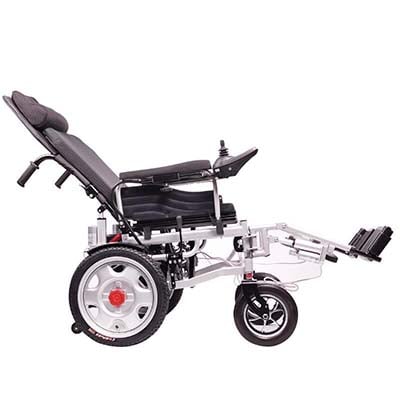
The best selling point about a reclining wheelchair, and probably the most significant difference between tilt and recline wheelchair, is that the person sitting in the chair can control the recline action themselves. Again, it works pretty much like every other recliner on the market today. You sit down, reach for the recline control, lean back, and lock the chair into position once you get your desired recline angle.
Lay Flat Option
It’s also worth noting that many reclining wheelchairs can lay completely flat. If you wanted or needed to spend a night in the chair and didn’t want to sleep sitting up, you could do that. Most reclining wheelchairs, however, aren’t blessed with an abundance of padding. If you plan on using the chair for napping or overnight sleeping, you’ll definitely want to invest in some additional padding so it’s comfortable enough to serve in that role.
The main defense against pressure sores is changing the pressure on your body. You can do that by changing the angle of your body while you’re sitting in a tilt in space or recline wheelchair.
For that strategy to be effective, though, you can’t just kick back in the reclining chair and relax. Every 2-3 hours, you’re going to want to change things up, tweaking your recline angle and the elevation of the footrests, so you take pressure off of certain parts of your body by putting more pressure on others. The good news is that since you can easily control the recline action and you know your body, you can find different sweet spots that work for you.
Less Expensive
Another strong argument in favor of reclining chairs in the recline vs. tilt comparison is that reclining chairs tend to be somewhat less expensive than their tilting counterparts. To be sure, both are more expensive than a conventional wheelchair that doesn’t do either, but more engineering has to go into the tilt function, which naturally increases the price.
Sliding
If there’s one glaring weakness in reclining wheelchairs, it lies in the fact that if you’re spending extended periods in them and you’re not buckled into the seat, you’ll probably experience the common issue that you begin to slide down and out of the chair.
If you have sufficient upper body strength, you can pull yourself back into a proper seating position. Depending on the type of injury or mobility issue you have, doing it yourself may not be possible or may go against your doctor’s advice as it could lead to further injury. You’ll probably need an assistant close at hand to give you a boost at least a couple of times a day.
Tilt vs. Recline Wheelchair
Not Travel-Friendly
On the tilt in space side of the equation, as we mentioned earlier, these chairs do tend to be more expensive as they are heavier and bulkier, which makes them decidedly not travel friendly. If you’re a frequent traveler, you may find it easier to buy a reclining wheelchair for when you’re on the road, leaving your tilt-in-space chair for when you’re at home.
Harder to Control
In addition to that, unlike the reclining chair, if you’re using a tilt in place model, in most cases, you won’t be able to reach the tilt controls while you’re sitting in the chair, which means you’ll need an assistant on standby to tweak the angle.
“Zero-G” Seating Option
These work the same way that “wall-hugging” recliners work, with the seat itself pivoting on its own axis, changing the angle of the seat rather than just altering the angle of the seatback.
If you recline in this type of chair and elevate the footrests such that your knees are elevated above your heart, you’re in a “Zero-G” seating position. This position has been proven to have a raft of health benefits, including improved circulation, dramatically decreasing your risk of pressure sores.
Better Relief
Given this, overall, we’d rate tilt in space chairs as the superior solution if the goal is the absolute minimization of pressure sores. Still, there’s one huge caveat: To make use of the chair, you’ve almost got to have an assistant on standby.
If you’re looking for a solution that will provide some benefit at minimal cost and that you can control from your position seated in the chair, then the reclining option is the way to go. Choosing reclining or tilt-in-space then comes down to two primary considerations: Can you afford the tilt in space model, and do you have easy access to an assistant who can help you as needed?
How to Buy a Reclining and Tilting Wheelchair
Comparing tilt and recline is all well and good, but surely there are at least a few chairs on the market today that offer the best of both worlds, right?
Actually, it is possible to find both tilt and recline manual wheelchair models and tilt and recline electric wheelchair models. Still, these tend to be even more expensive than their single-function counterparts and significantly more expensive than a conventional wheelchair that does neither.
Manual Tilt and Recline Wheelchairs
A manual wheelchair with tilt and recline is, in our view, one of those ideas that looks better on paper than it does in practice. While they do exist, and some people who use them absolutely swear by them, you still need to have an assistant on standby to make use of the tilt-in-space feature on every model we’ve seen to date.
Electric Tilt and Recline Wheelchairs
On the other hand, an electric wheelchair with tilt and recline puts everything at the fingertips of the person sitting in the chair. These chairs represent the ultimate flexibility, allowing you to change the recline angle and the angle of the seat frame itself at the touch of a button. Still, again, more engineering means an even higher price. If you’re also on a budget, as good as this type of chair is at minimizing the risk of pressure sores, it may simply be out of reach.
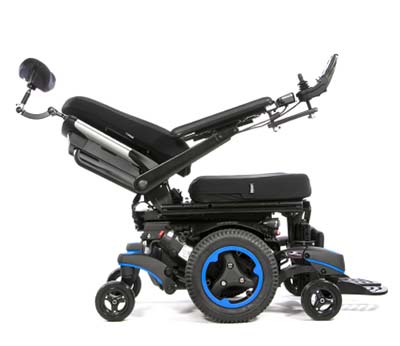
In terms of buying one, whether you’re considering a manual model or a power wheelchair with tilt and recline, it’s a significant investment. Before you spend the money, it would definitely be of value to head to the nearest medical equipment showroom and see if you could try one on for size.
Barring that, you’ll need to pull up the exact specifications of the chair you’re considering buying and get some help taking careful measurements of your body so you can make sure that the measurements of the chair you’re considering are a good fit with your own measurements.
It also pays to have a firm understanding of the return policy of whatever company you buy from because if the chair you get doesn’t fit you like a glove, you’re going to want to ship it back and get something that does. Careful measurements will minimize that risk, but they don’t always tell the whole story. Given the amount of time you’ll be spending in whatever chair you select, it’s just got to be a good fit for you. Don’t cut any corners on that front!
Final Thoughts on Tilt and Recline Wheelchairs
At the end of the day, the wheelchair tilt vs. recline argument comes down to three things:
If you invest in a power tilt and recline wheelchair, then the bottom-most bullet point goes away, but the tradeoff is that you’ll pay a hefty premium to accomplish that.
Both types of wheelchairs can help reduce your risk of developing pressure sores, but only if you’re physically capable of making use of the features that drive that process or have the assistance you need when you need it.
References & Resources:
- Taking Control: An Exploratory Study of the Use of Tilt-in-Space Wheelchairs in Residential Care, NCBI
- Do Tilt-in-Space Wheelchairs Increase Occupational Engagement: A Critical Literature Review, Taylor & Francis Online
- Measuring the Effect of Incremental Angles of Wheelchair Tilt on Interface Pressure Among Individuals With Spinal Cord Injury, nature
- Seating and Wheelchair Evaluation, StatPearls
- Pressure Cushions and Tilt-in-Space Wheelchairs to Prevent Pressure Areas, Cerebral Palsy